The choice of Kazimierz Dolny was for E., mostly. I was seeking a space of respite in advance of what will be a very sober and grim next few days as we visit Majdanek, Belzec, Sobibor, and Treblinka. My goal was to keep talk about the Shoah and WWII to a minimum, but this place, too, is scarred.
There seems to be no space in Poland untouched by the genocide. In Kazimierz Dolny, there are echos and traces. The most visible is the former Synagogue, which has been restored and now lets out rooms. For those wondering about the ethics of this, it is owned by the Jewish Religious Community of Warsaw, and houses a Judaica shop and café. It's a remarkable restoration, and I'm happy that some revenue is feeding back into the Jewish community. As Yechiel Weitzman notes, in Jewish law it is permissible in some cases to repurpose synagogues. I felt the walls would speak too loudly of sadness for me to sleep. This thought kept me occupied for a long time while I was planning this trip. Any building we stay in that predates the war can make the same claim but it was the combination of this being a former house of worship that unsettled me beyond what I, personally, could tolerate. Still, I make note of this for future visitors who stumble onto this post.
About Kazimierz Dolny
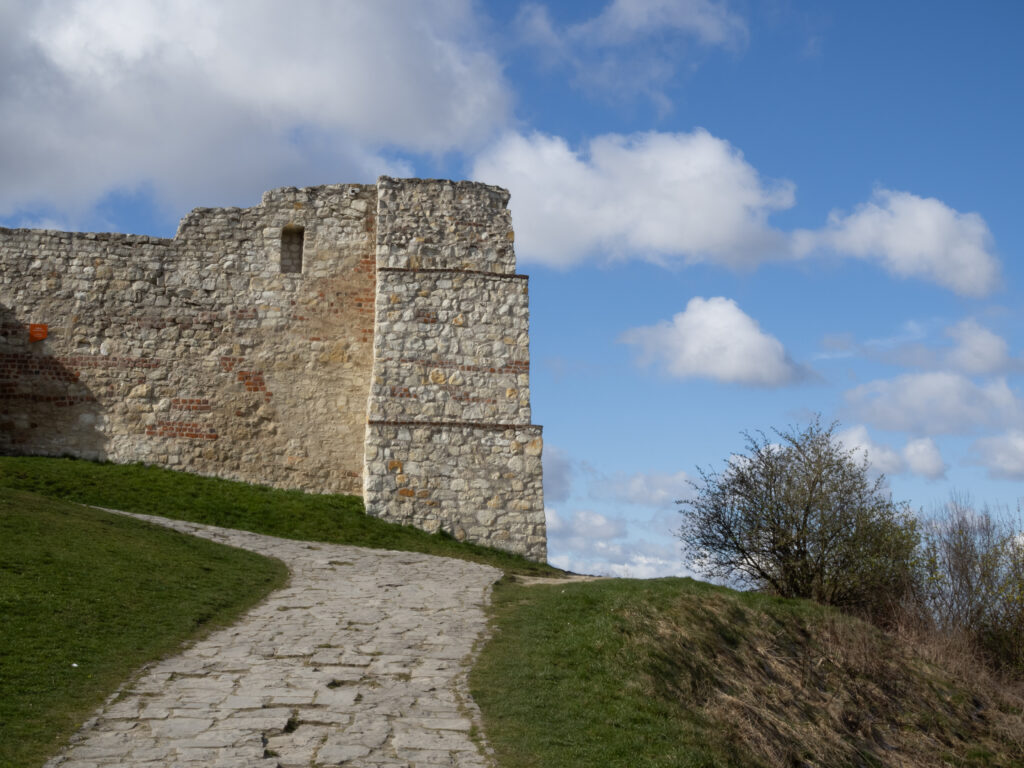
Kazimierz Dolny is one of the oldest towns in Poland, dating back to the 11th century. Once home to a vibrant Jewish community, only traces of the community remain. The restored synagogue in the market square was thought by the Jewish community to have been a gift from Casimir the Great to his Jewish mistress Esther. The fortress on the hill is connected in the legend to Casimir III's visits with his mistress. The story of Esther is a folk legend within the Polish Jewish community, and a fascinating one worth the aside:
Oral versions also note that she lobbied on behalf of her people. Although marital relations between a Jew and a non-Jew are forbidden in Jewish law, they were considered justified here, as in the biblical story of Esther, as essential for the survival of the entire Jewish community. The heroine’s conduct is interpreted as an act of self-sacrifice.
The Esterke legend was transmitted orally, each community adding local colour.
According to the chronicle of Jan Długosz (1415–1480), Esterke was Casimir’s mistress who persuaded him to invite Jews to Poland; he also granted them extensive privileges. The story claims that the couple had four children, two boys raised as Christians and two girls raised as Jews. In 1334, Casimir did, in fact, extend privileges that had been first granted by Bolesław of Kalisz.
You can see pre-war Kazimierz Dolny in a yiddish-language film called Yiddle with his Fiddle (1936). It's a haunting watch. The extras are locals, and that lens is a painful one especially since I wasn't able to easily locate any survivor testimony that had been digitized to share here.
I also wanted to share a couple of photographs, in the absence of survivor testimony.
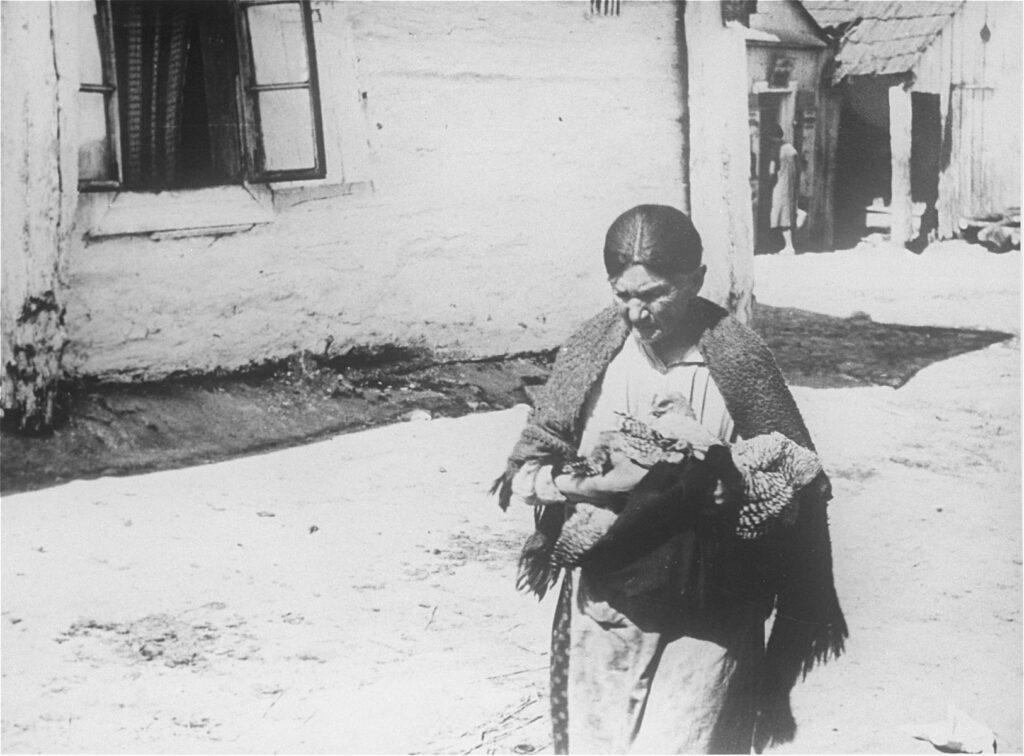
©United States Holocaust Memorial Museum, courtesy of Adam & Krystyna Drozdowicz
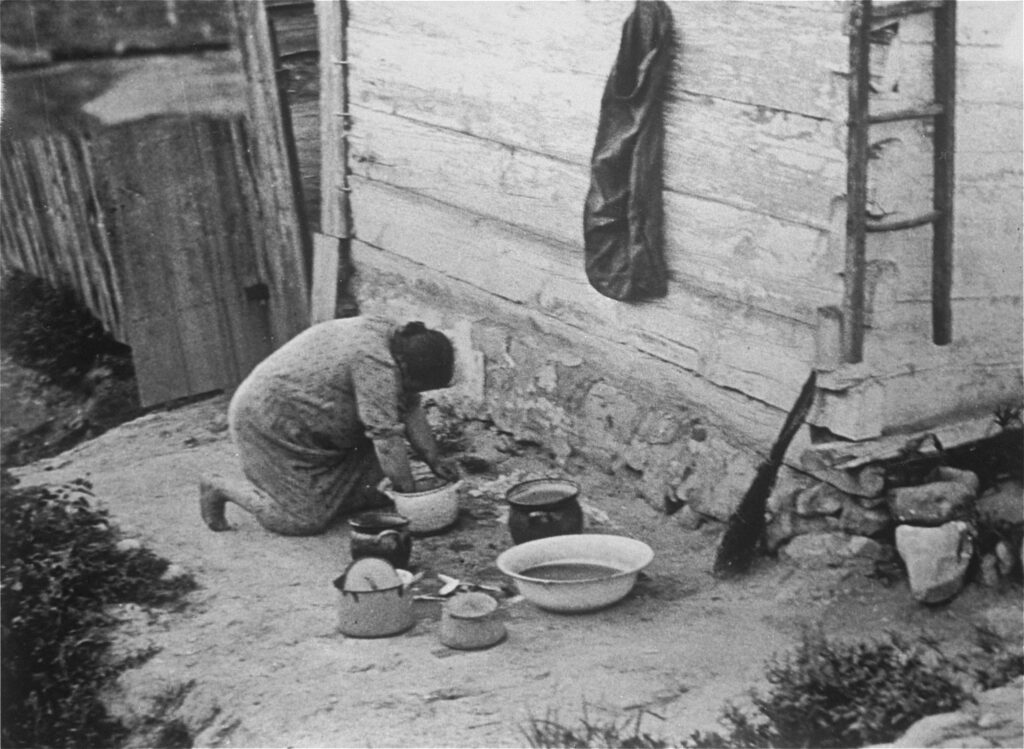
Today there are no Jews living in Kazimierz Dolny where they were once a majority of the citizenry. By 1942, the last of the Jewish residents were murdered In Belzec, and in 1943 the remaining inmates at the labour camp were killed when it was liquidated.
What remains
All that is left of the once-vibrant Jewish community here is a carefully restored and preserved synagogue and a stunning memorial just outside of the main town square.
The day I visited, the Dawna Synagogue was holding an exhibit of Benedict Jerzy Dorys' photography of Kazimierz Dolny in 1930 and 1931. The pictures were stunning. It felt like exhaling to be in this beautiful place, with a carefully curated shop that didn't sell weird antisemitic baubles. The store is worth a visit, too, if you're in town.
Just outside of town, there is one of the most affecting memorials I have ever seen.
The memorial is a lapidarium, constructed from destroyed matzevot (grave headstones) that had been used to make walls, sidewalks, and roads into a wailing wall by artist, architect and former fighter in the Polish Home Army during the war, Tadeusz Augustynek. Yechiel Weizman's book provides this context:
As one approaches the wall, small pieces of paper containing handwritten requests, inserted between the cracks and alcoves of the monument, stick out. This intriguing phenomenon, which has become a new local folk custom, is reminiscent of a similar one at the original Wailing Wall in Jerusalem. This practice might also pay homage to the Hasidic tradition of leaving kvitlach on the grave of a tzaddik, a tradition also adopted by non-Jews
I woke up early so I could be there when the sun rose. It had snowed a bit overnight, and there was frost still dusting the ground. As I approached the memorial wall, the sun broke through the crack, and the whole wall was lit up from the heavens. That felt right.
The back section has scattered matzevot, placed carefully in the trees. I stopped at each, looking at the intricate Hebrew, and using my translation app to try and read a few. Some of the headstones had symbols of hands putting coins into boxes, and I was immediately disconcerted because of what I had seen in the shops in town the day prior. It turns out this is a funerary symbol, indicating a person who had been a philanthropist. A few of the papers placed in the wall had fallen, so I put them back. I straightened a few fallen candles. I spent an hour wandering around, all told.
(click to open gallery)
Tomorrow is Majdanek.
Additional Reading
Esterke by Haya Bar-Itzhak (translated from Hebrew by David Strauss) in The YIVO Encyclopedia of Jews in Europe.
Jewish Kazmierz: zydowski-kazimierz
Shtetl Routes: kazimierz-dolny-przewodnik
Kazmierz Dolny guide from Shtetl Routes
Weizman, Yechiel. Unsettled Heritage: Living next to Poland’s Material Jewish Traces after the Holocaust. Cornell University Press, 2022. Buy here.